Scotiabank Arena App
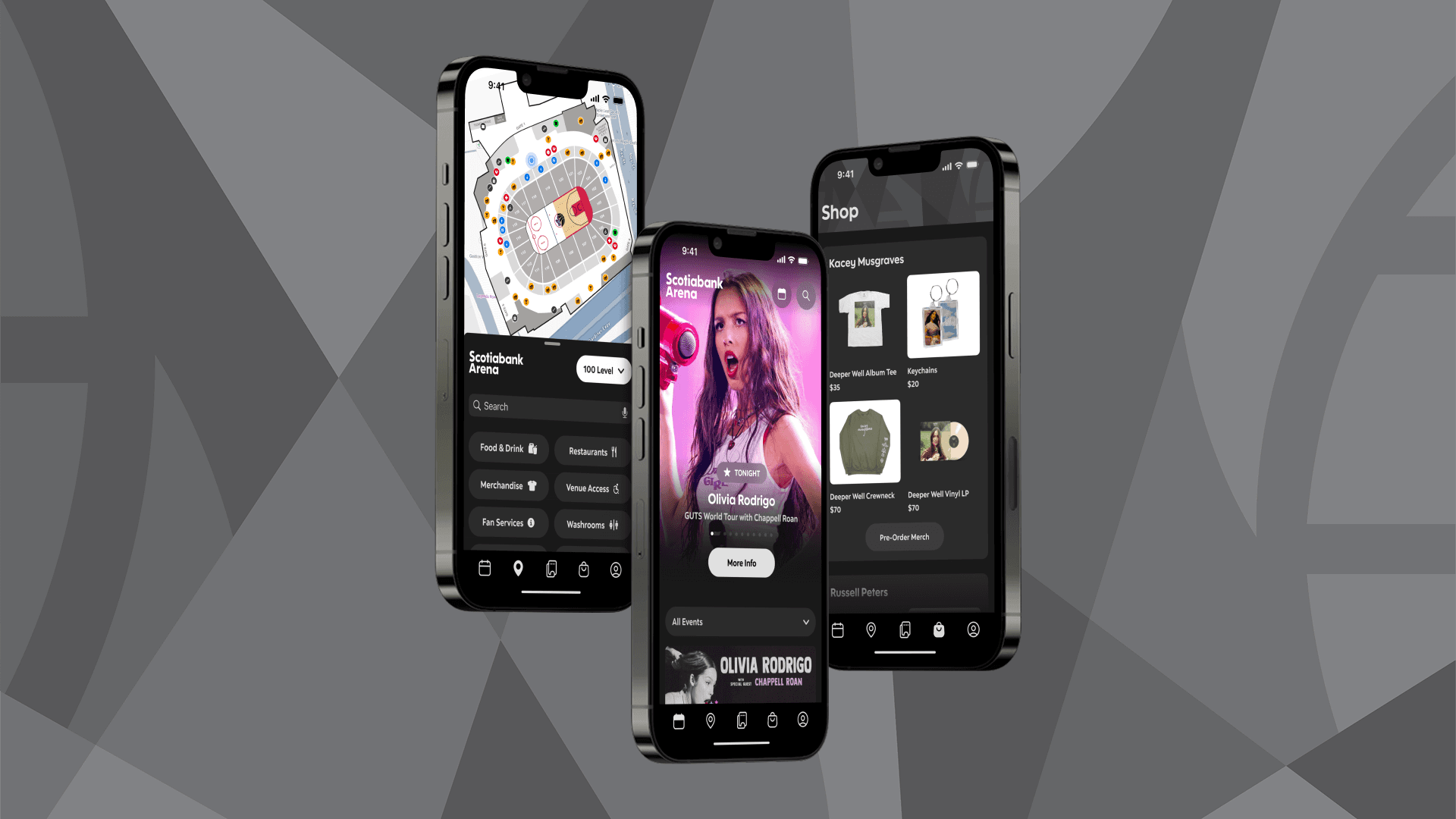
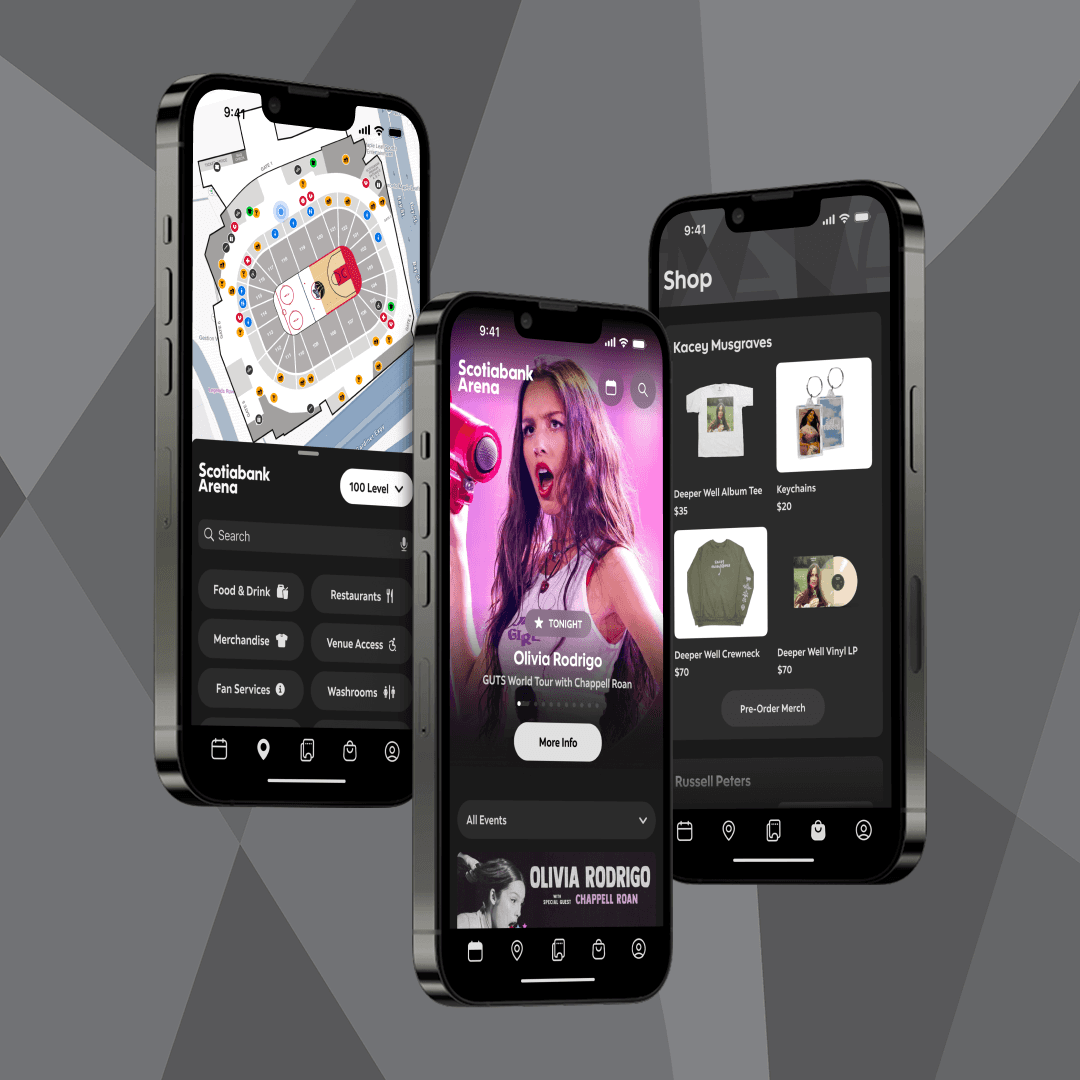
Guiding fans through the venue while driving more revenue for artists.
Timeline:
Sept 2024 - Jan 2025
Interface:
iOS/Android App
Team:
Role:
Sr. Product Designer
Background
After launching the revamped native NHL app, MLSE shifted focus to reimagining the Scotiabank Arena app in parallel with major renovations happening inside the venue. With the existing app approaching its renewal with YinzCam, the organization saw an opportunity to modernize the experience and bring it in line with the arena’s broader transformation. A small cross-functional group including myself was brought in to help rethink core fan journeys, update visuals, and support the delivery of a refreshed, more intuitive app experience.
Role
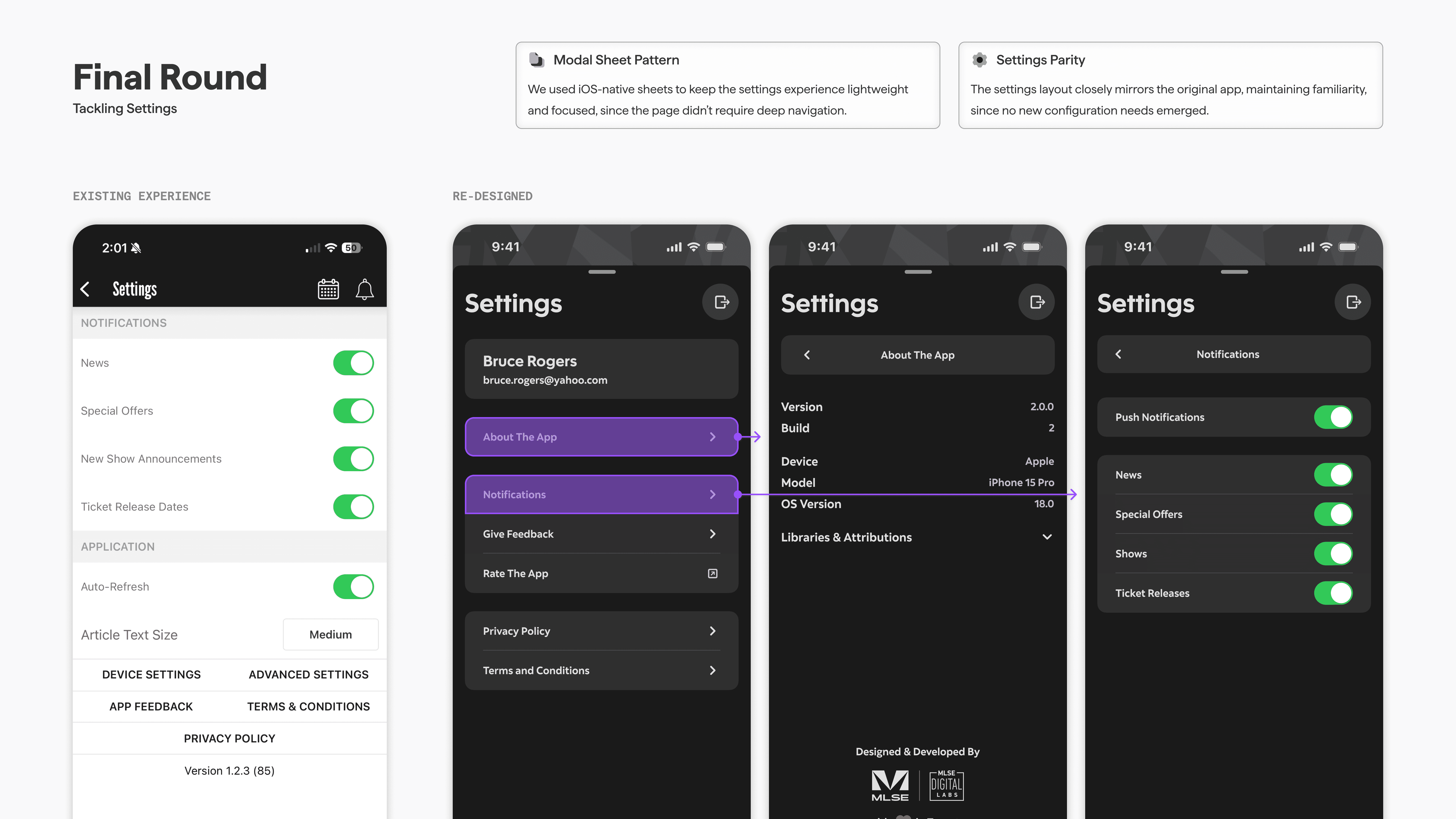
As the Senior Product Designer on the project, I was responsible for key user flows, building and maintaining a source-of-truth design document, and QA’ing the full experience ahead of deployment to ensure consistency, accuracy, and alignment with the new brand direction.
Opportunity
Guests missed out on experiences because information was scattered and hard to discover.
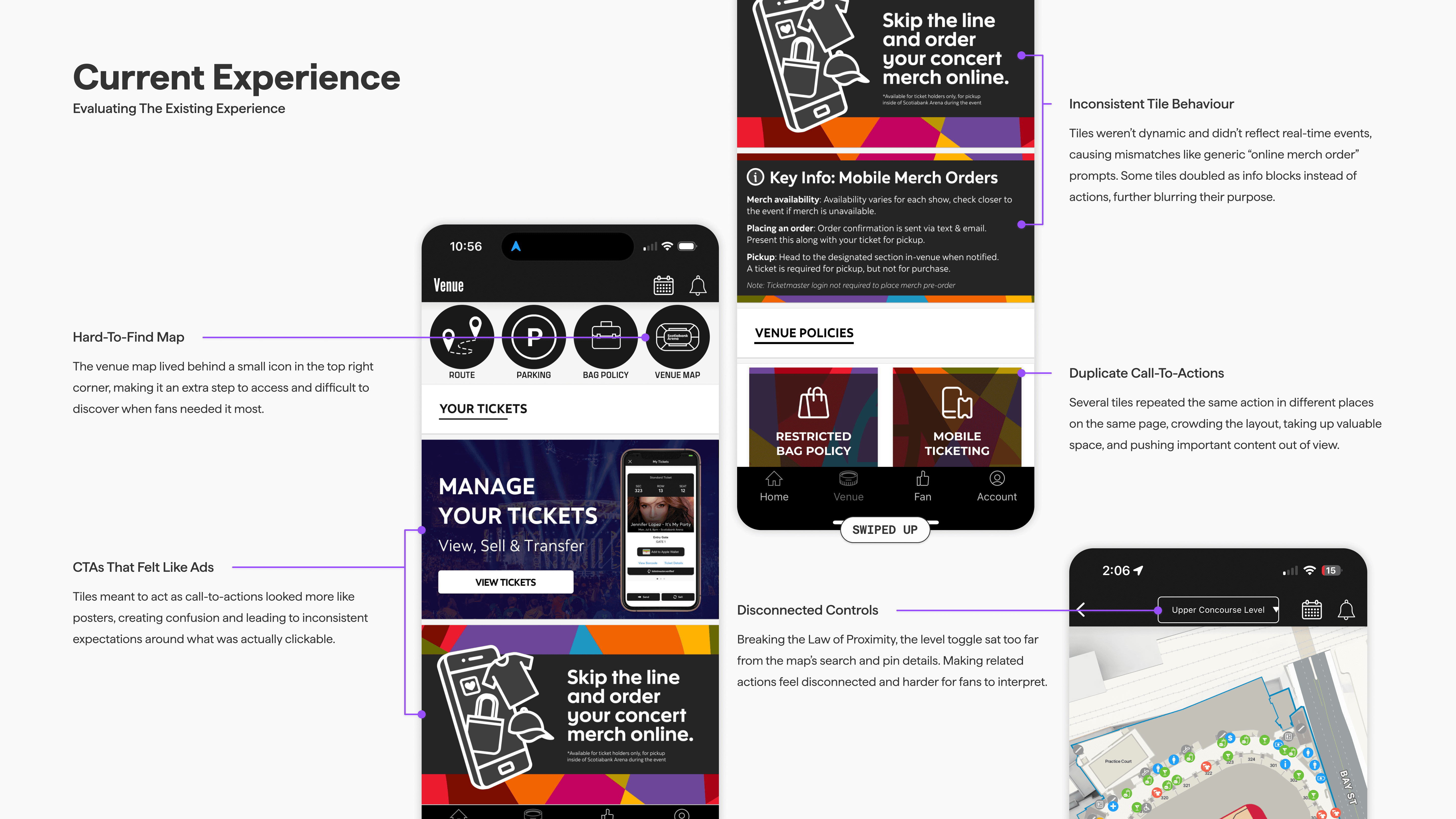
From pre-game events to concession specials and wayfinding, important details were spread across disconnected channels. This reduced engagement, limited upsell opportunities, and weakened the feeling of a cohesive Scotiabank Arena experience.
Outcome
Giving fans all the tools they need for a seamless venue experience.
Reimagined ahead of arena renovations, the app unifies mobile ticketing, live event info, and an updated wayfinding experience. Helping fans find what they need faster, and enjoy more of what they came for.
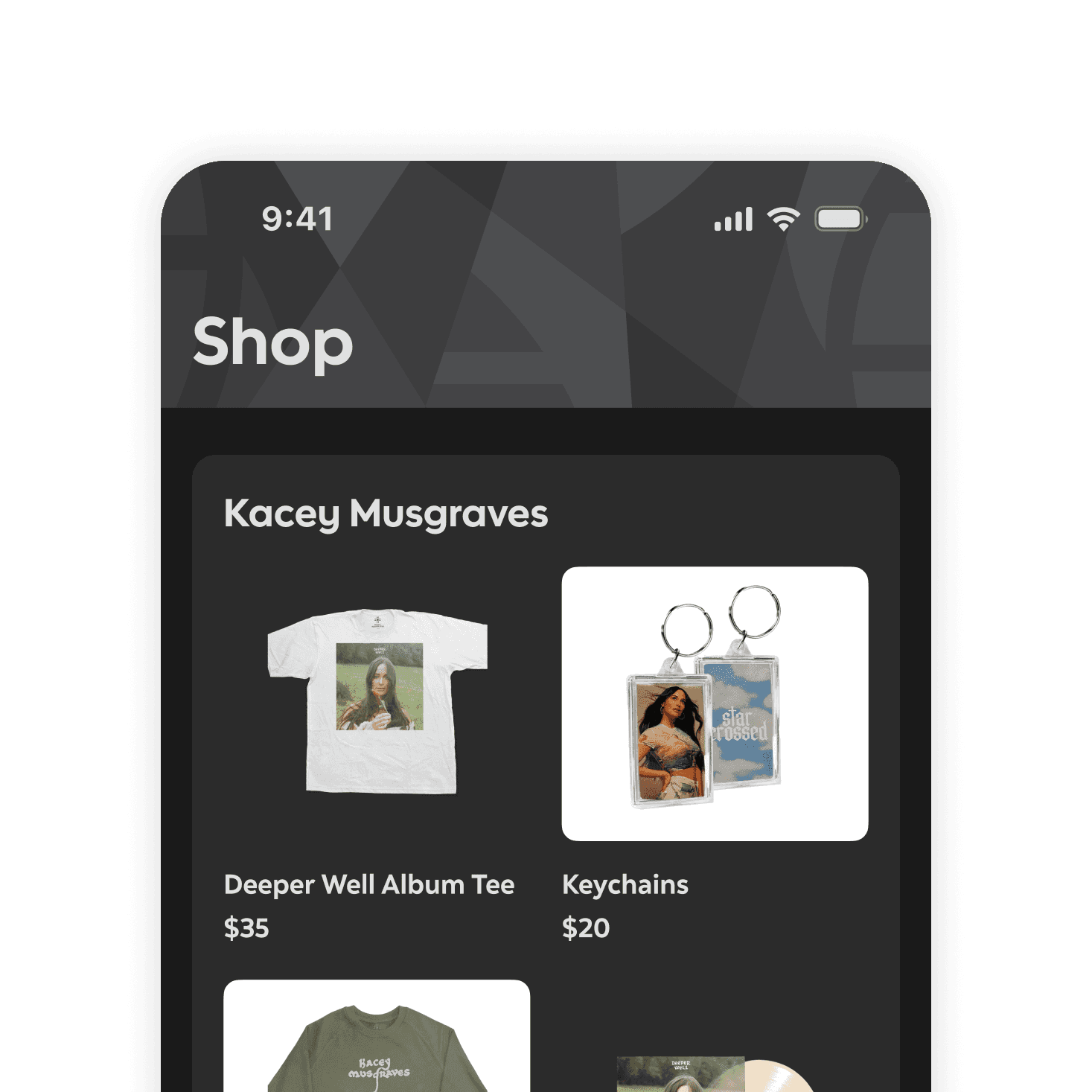
Featured Merch
Merch drops now live in a dedicated section, surfaced on the home screen and event pages so fans can discover and buy before doors even open.
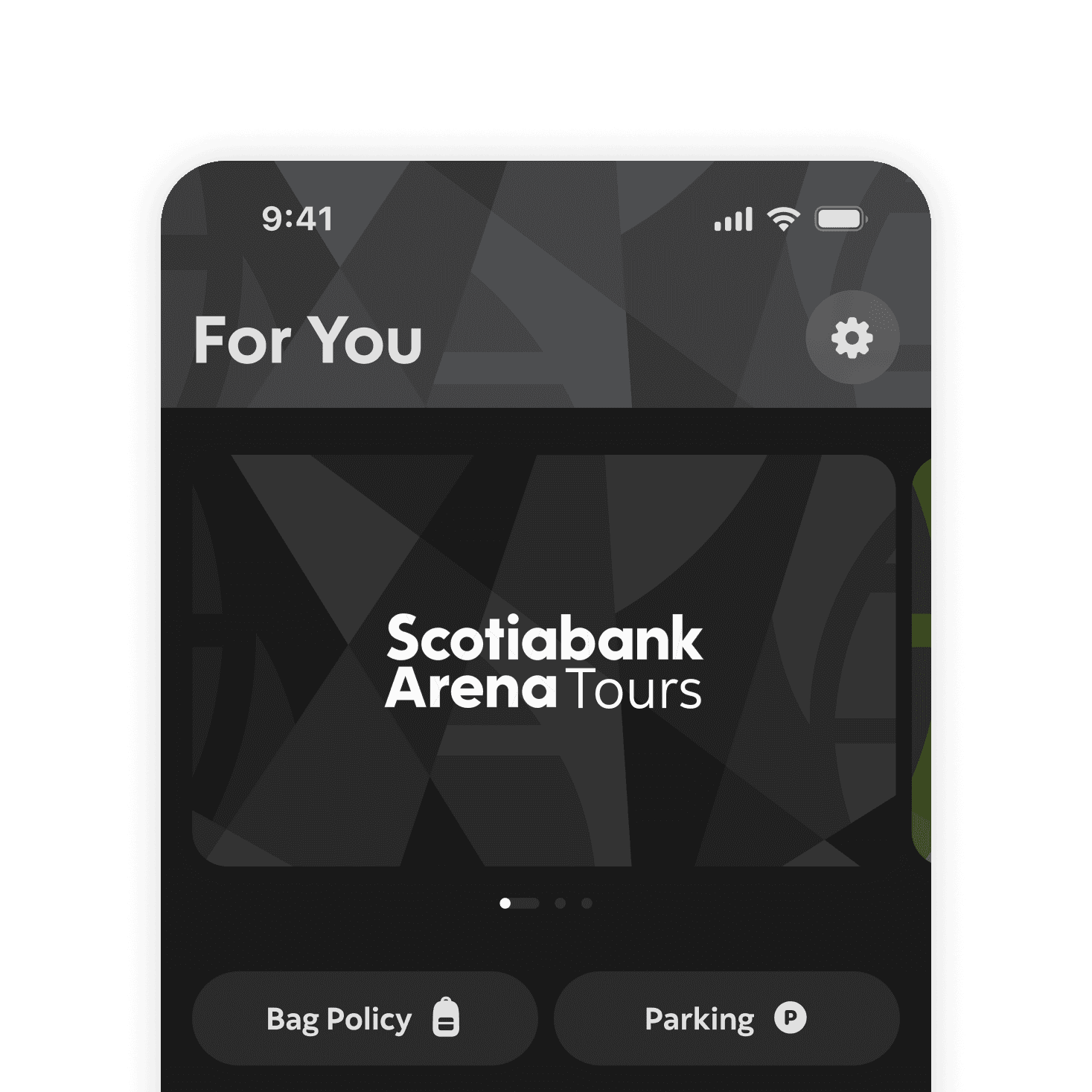
For You Page
A personalized hub that surfaces key venue info alongside high value offers like gift cards, venue tours, and in-seat ordering.
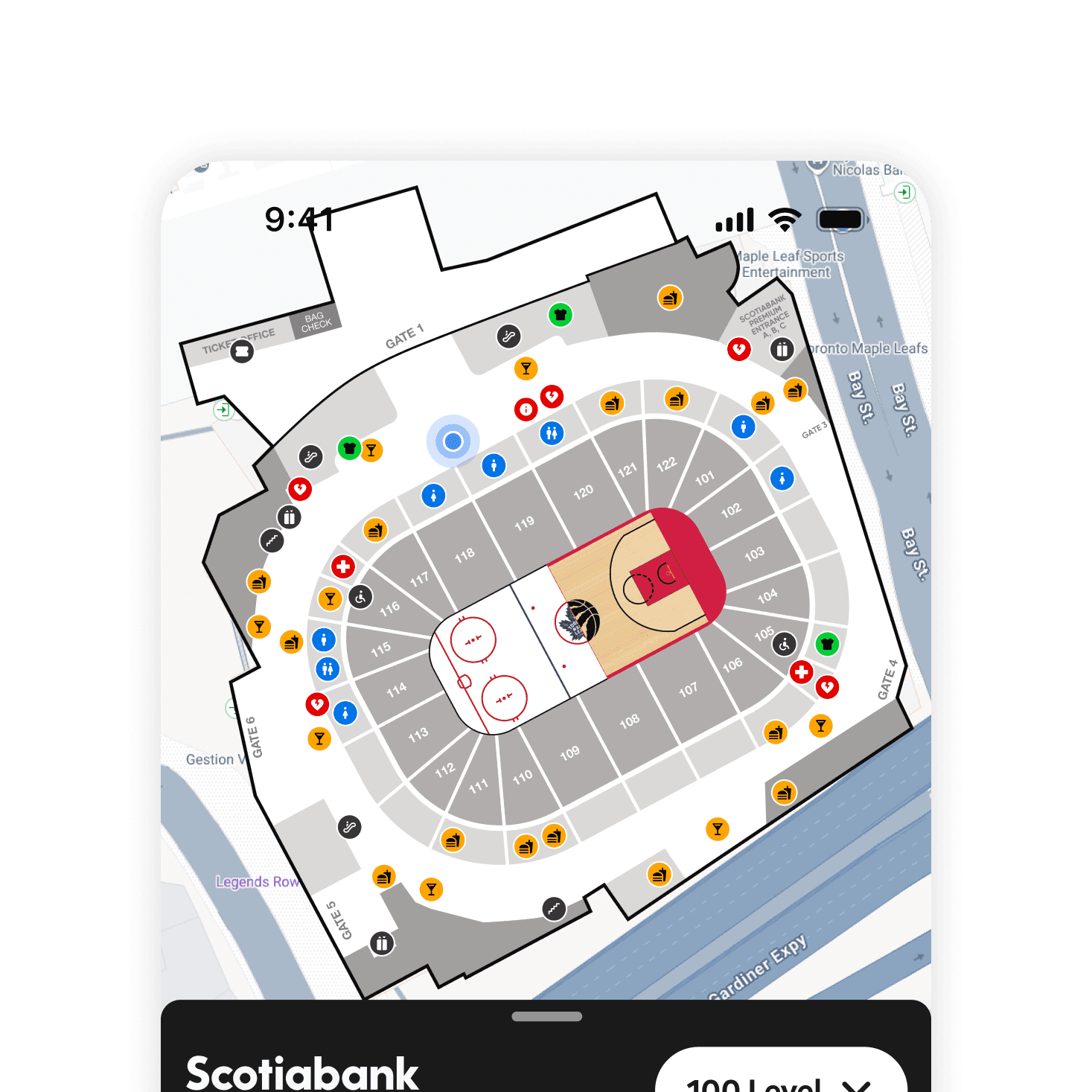
Modern Map
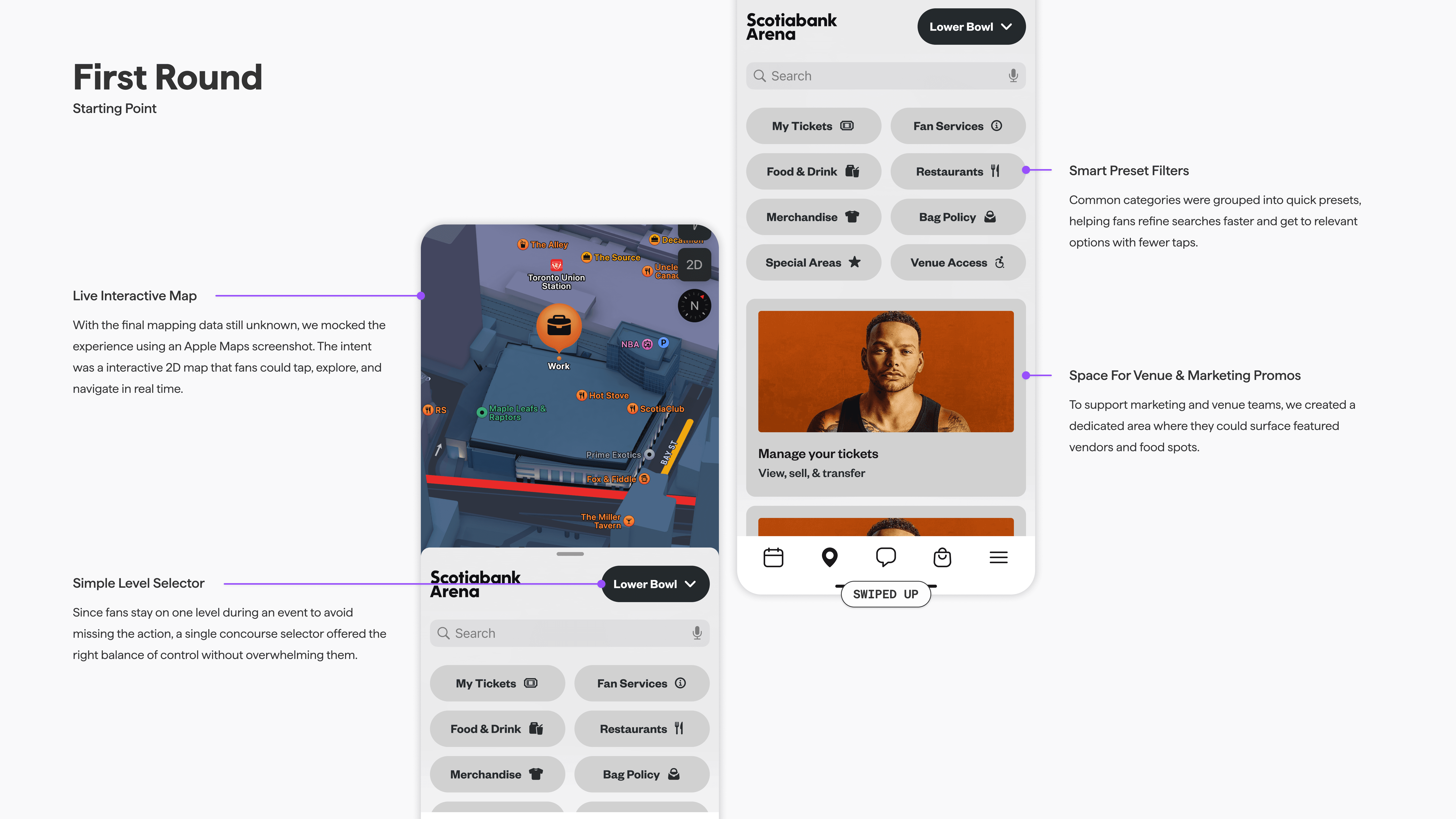
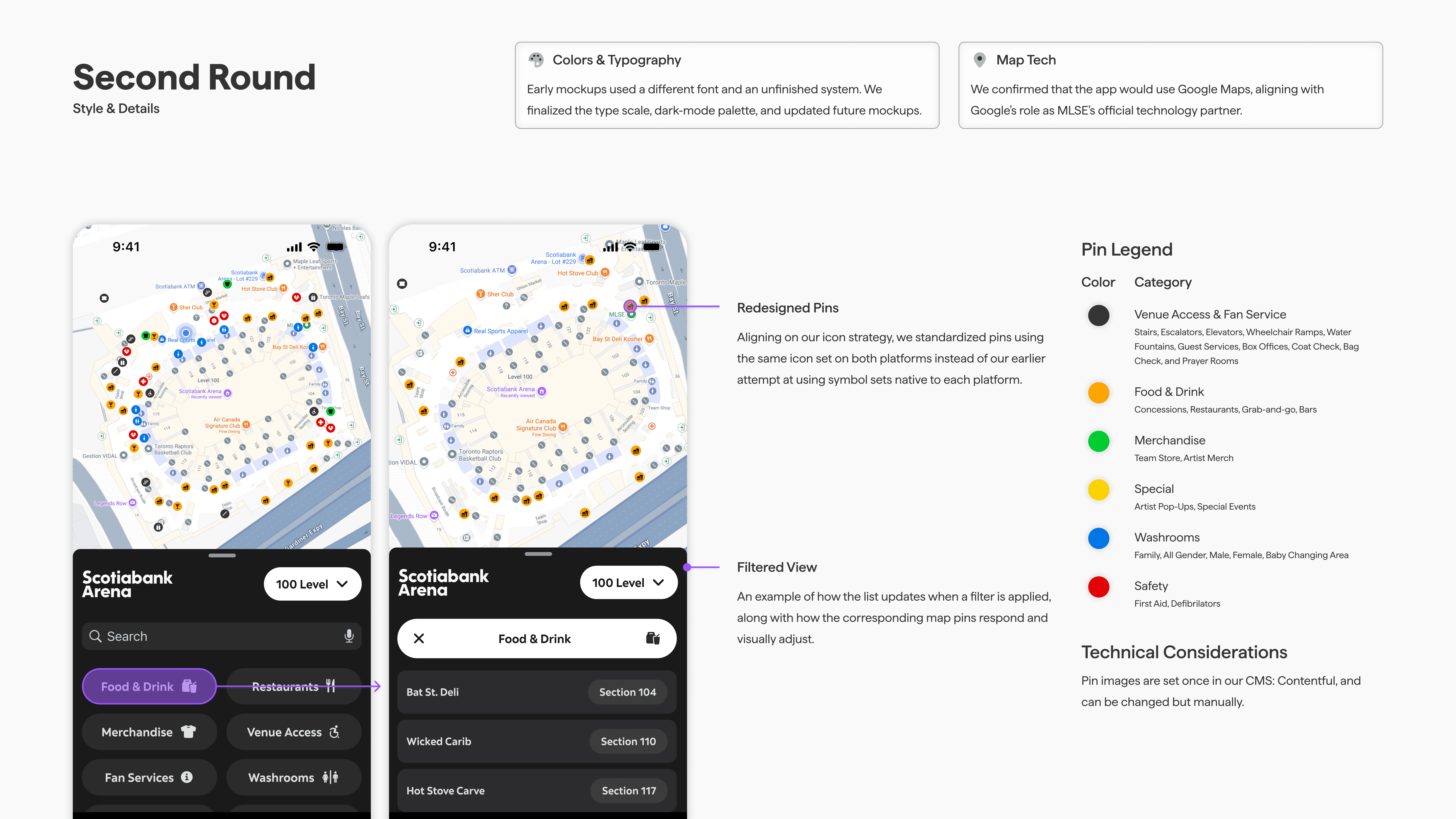
A redesigned, simplified, and more visual map helps fans navigate renovations, find gates, and locate amenities in seconds.
Deliverables
As part of a small design team, I partnered closely with Design Lead. While he established the visual language and primary app experience, I owned the detailed design documentation, secondary and alternate states, and the final App Store visuals.
Prototypes
Venue Map
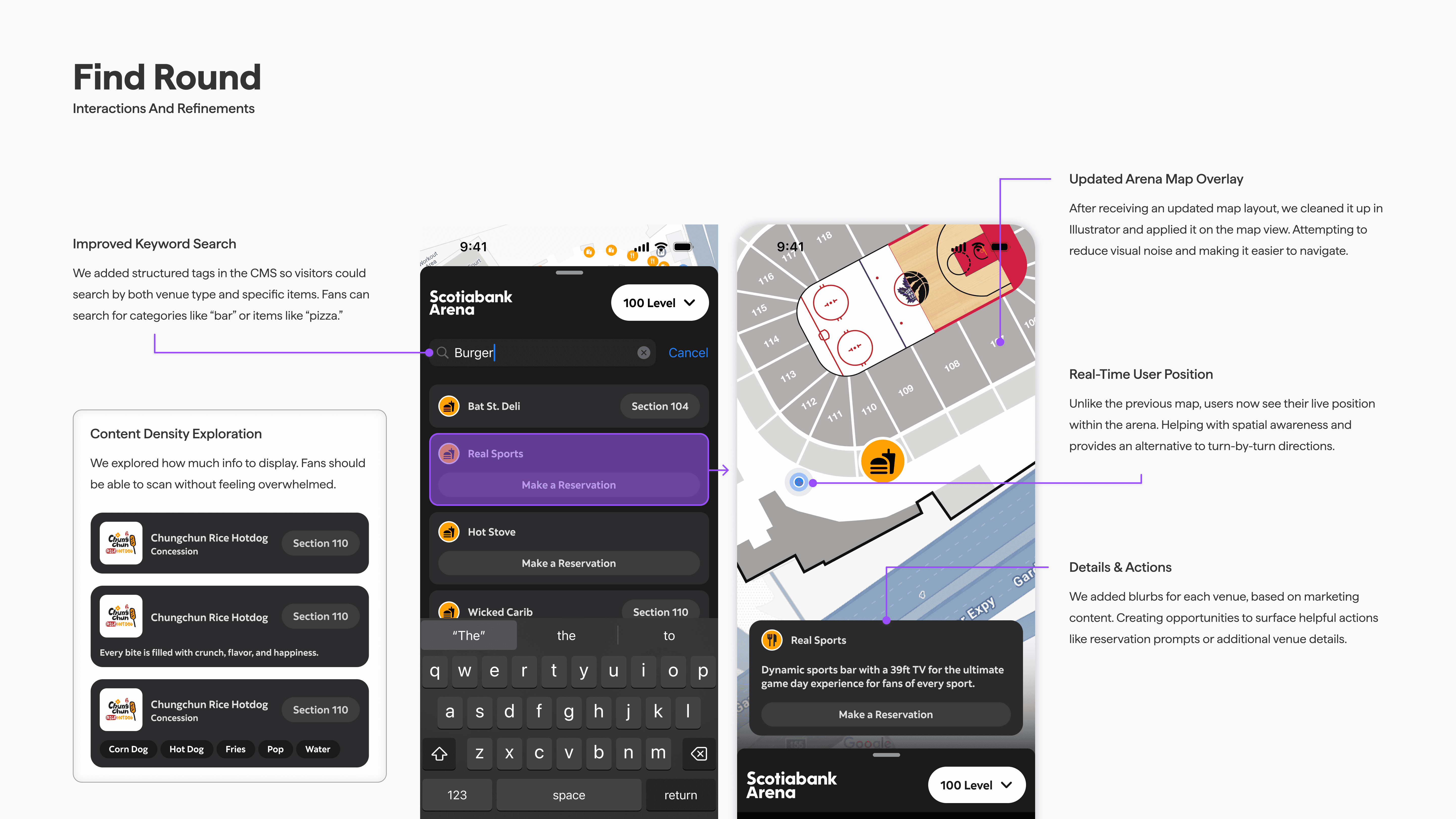
The previous venue map was largely informational and didn’t reflect where fans actually were in the arena. Our goal was to make the experience more contextual and relevant. Using Google Maps and updated venue schematics, we redesigned the map to better surface vendors, shops, and points of interest around the user.
For You
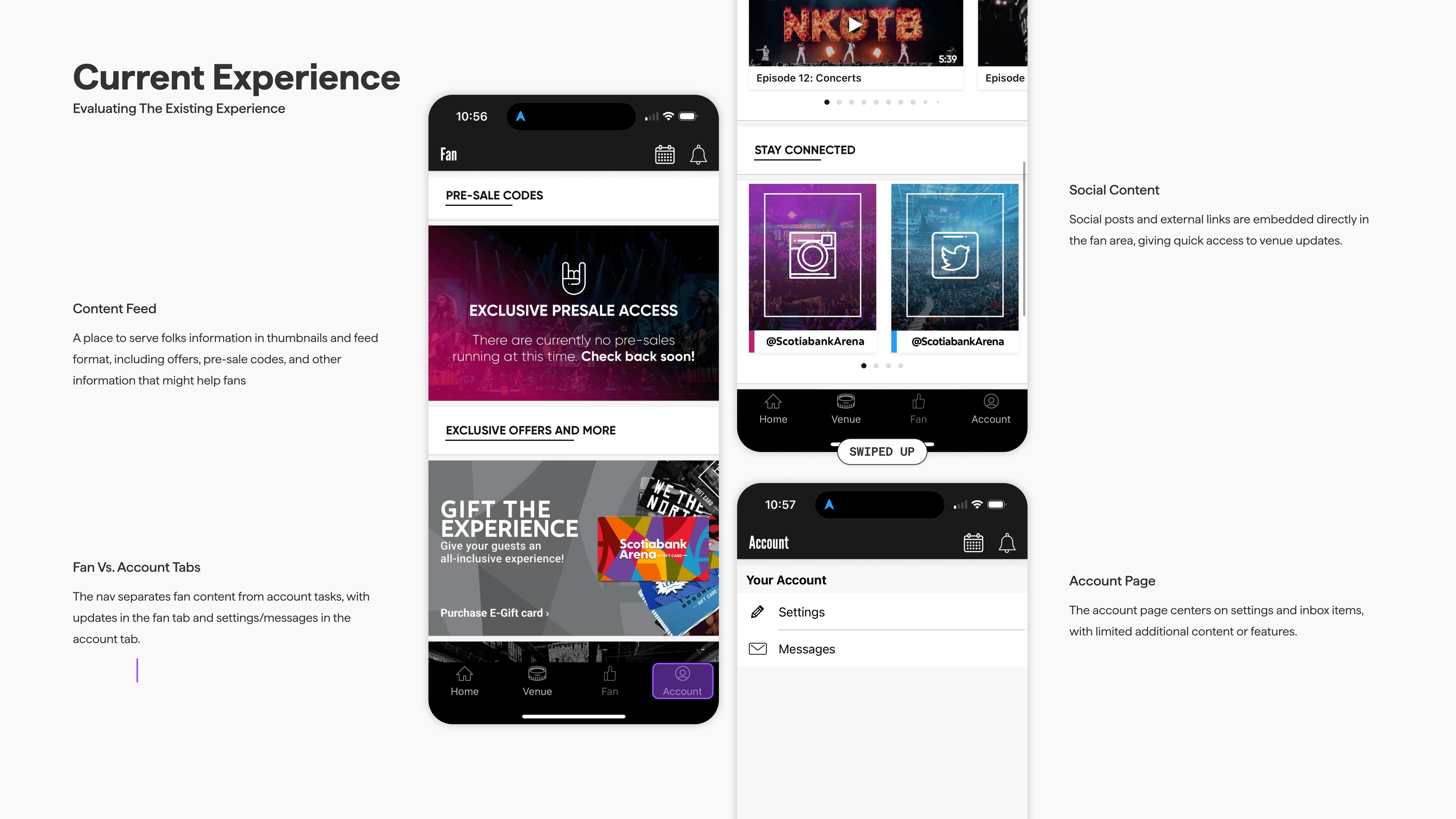
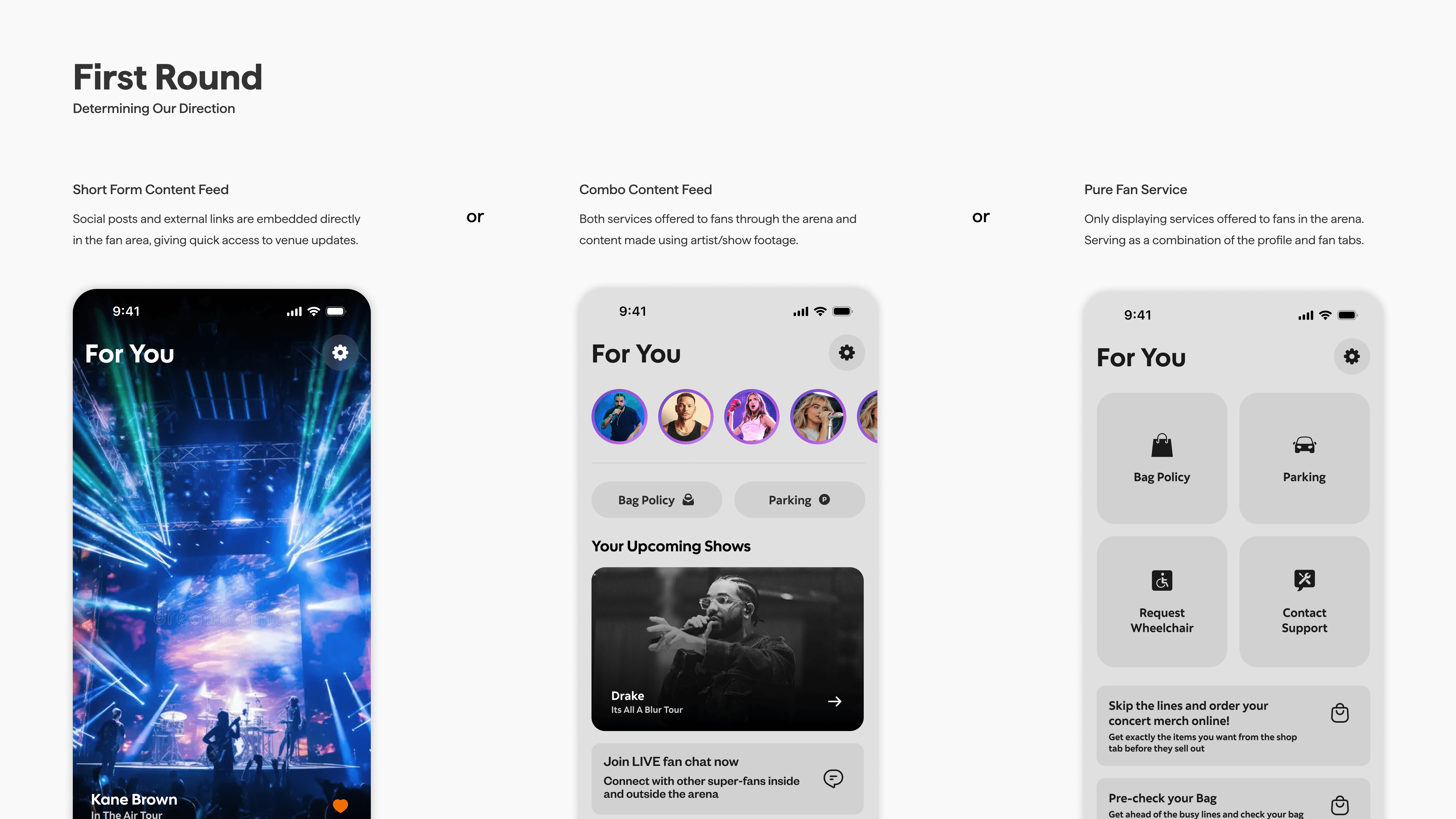
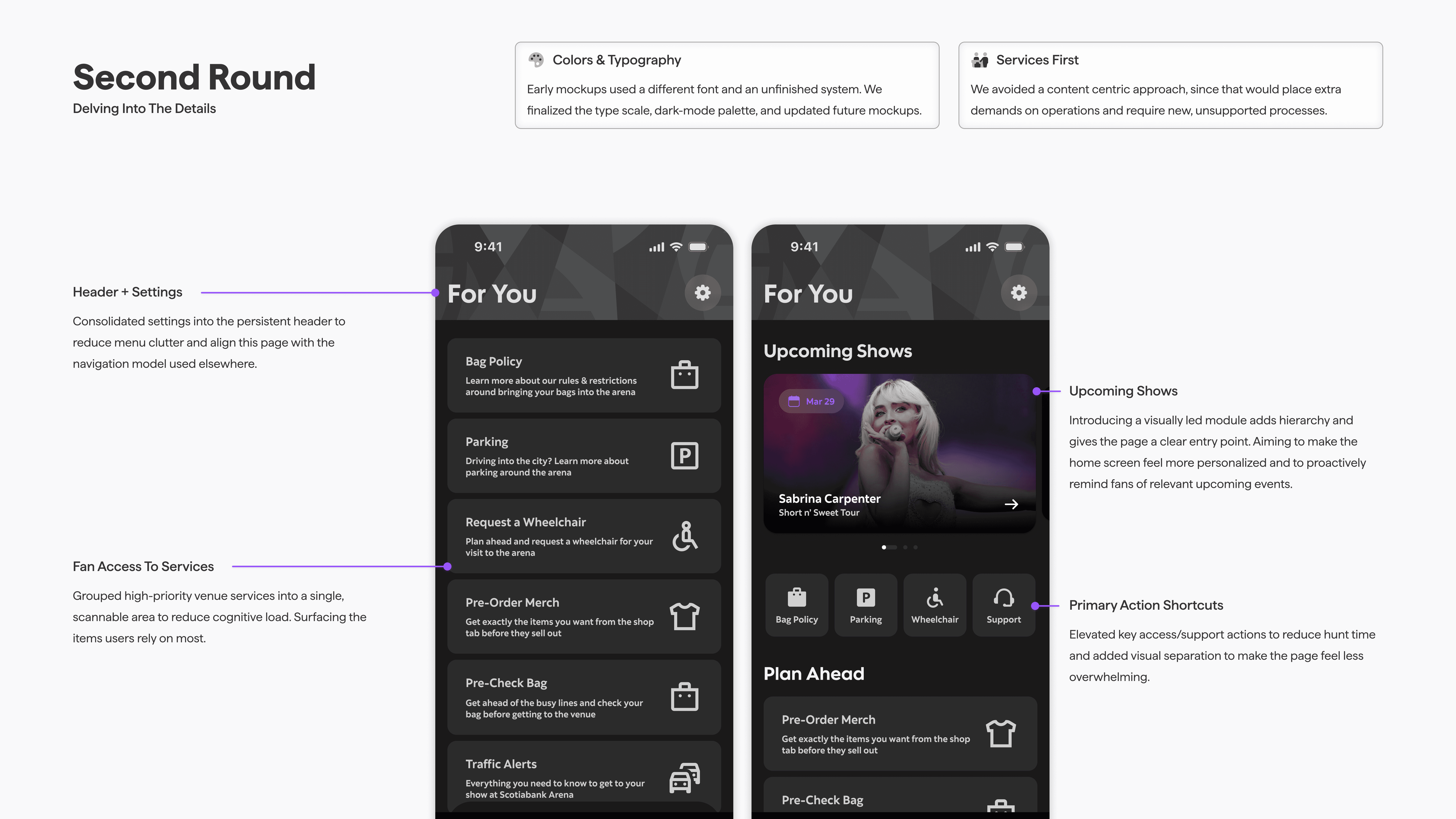
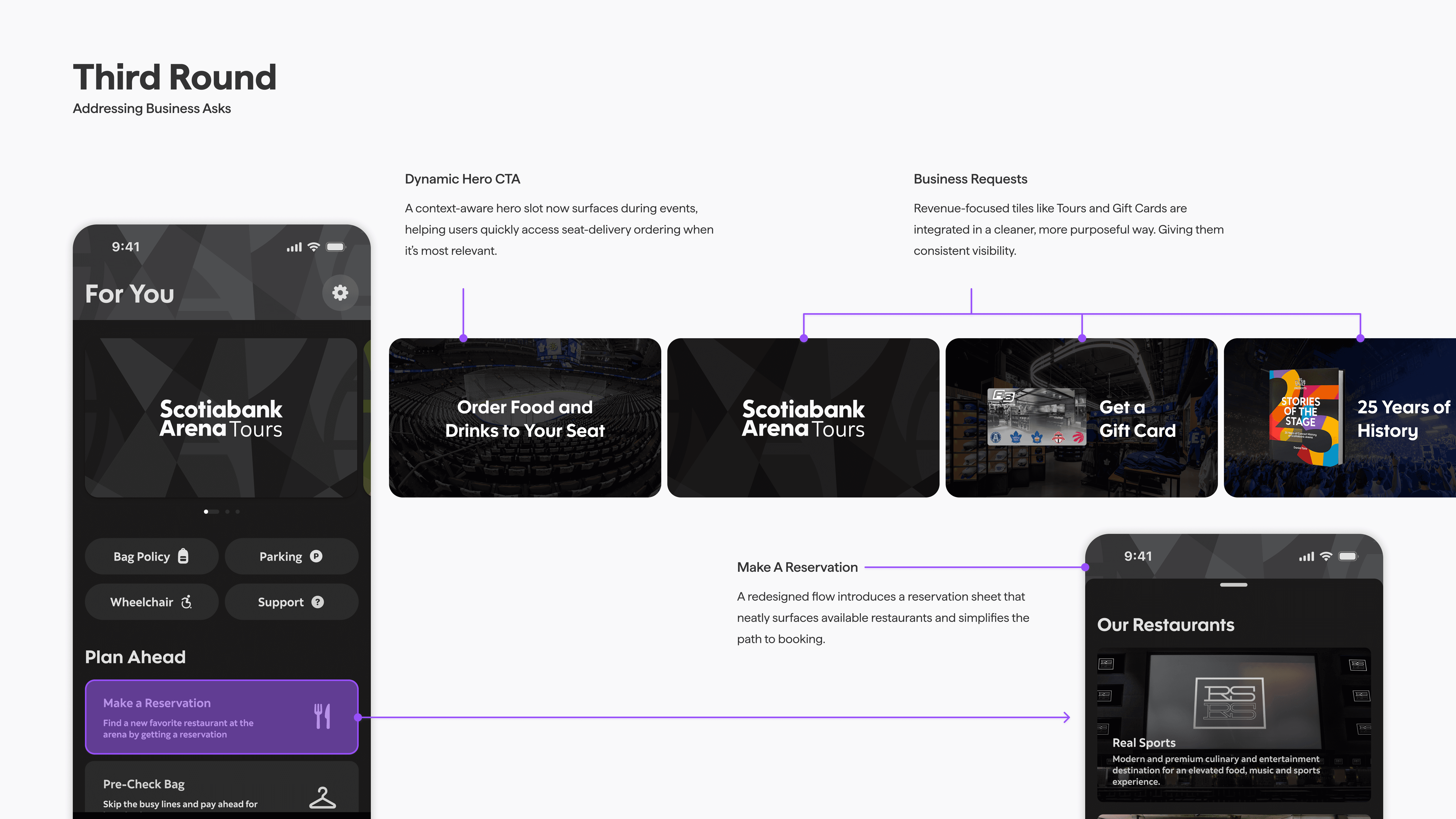
A few competing objectives led us to create a For You page. From a revenue standpoint, it became a place to highlight new tours, gift cards, and in-seat ordering. From the fan perspective, it served as a central hub for essential event day information like arrival details, parking, bag policies, and general support.
Android
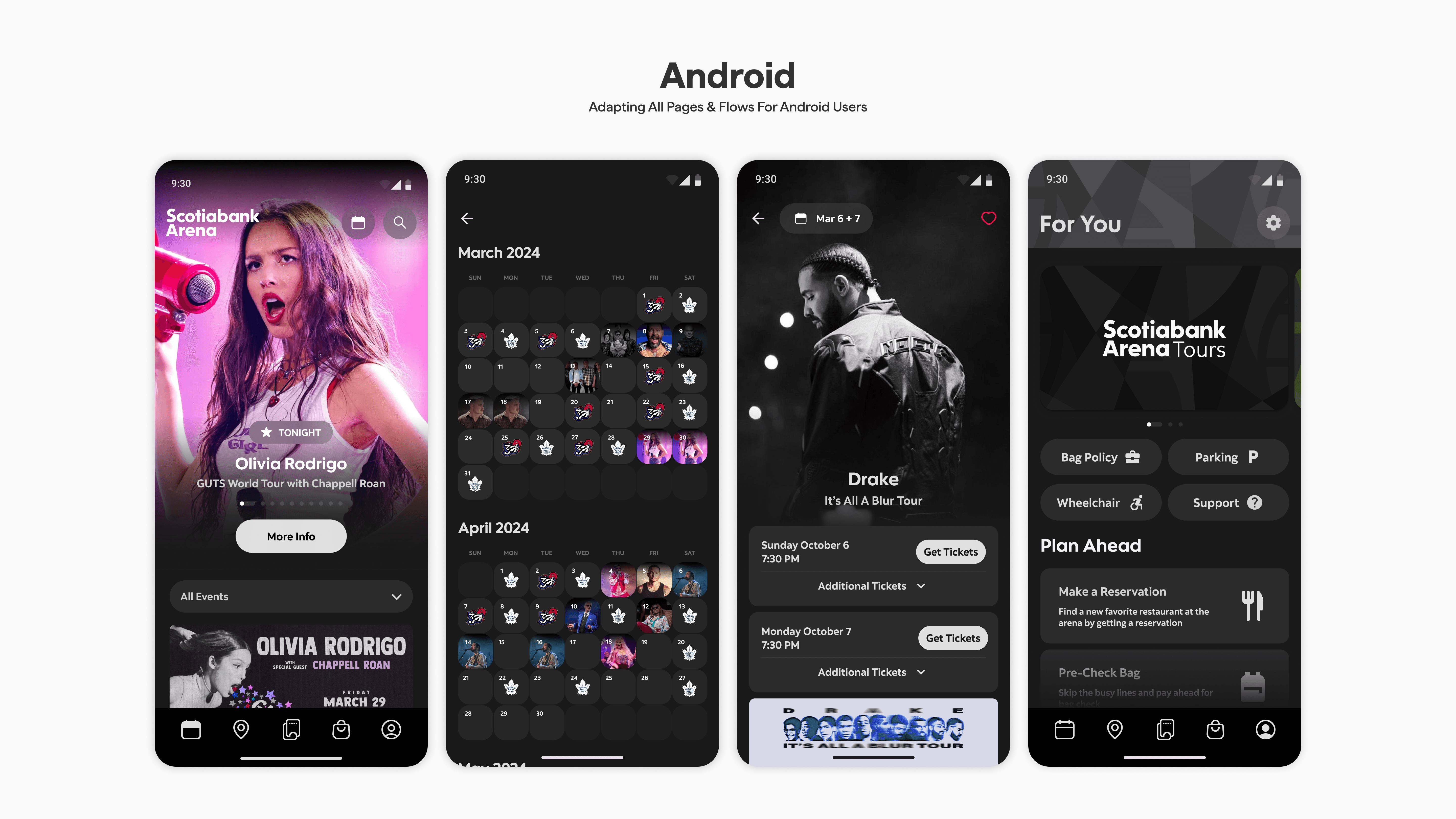
As the co-designer, I led the Android side of the project, ensuring the experience aligned with Material Design standards. Because Android didn’t support stacking multiple sheets at the time, I revisited those patterns and transitioned certain sheet-based interactions into dedicated pages to keep the flow clear and intuitive.
Source of Truth
Hand-Off Documentation
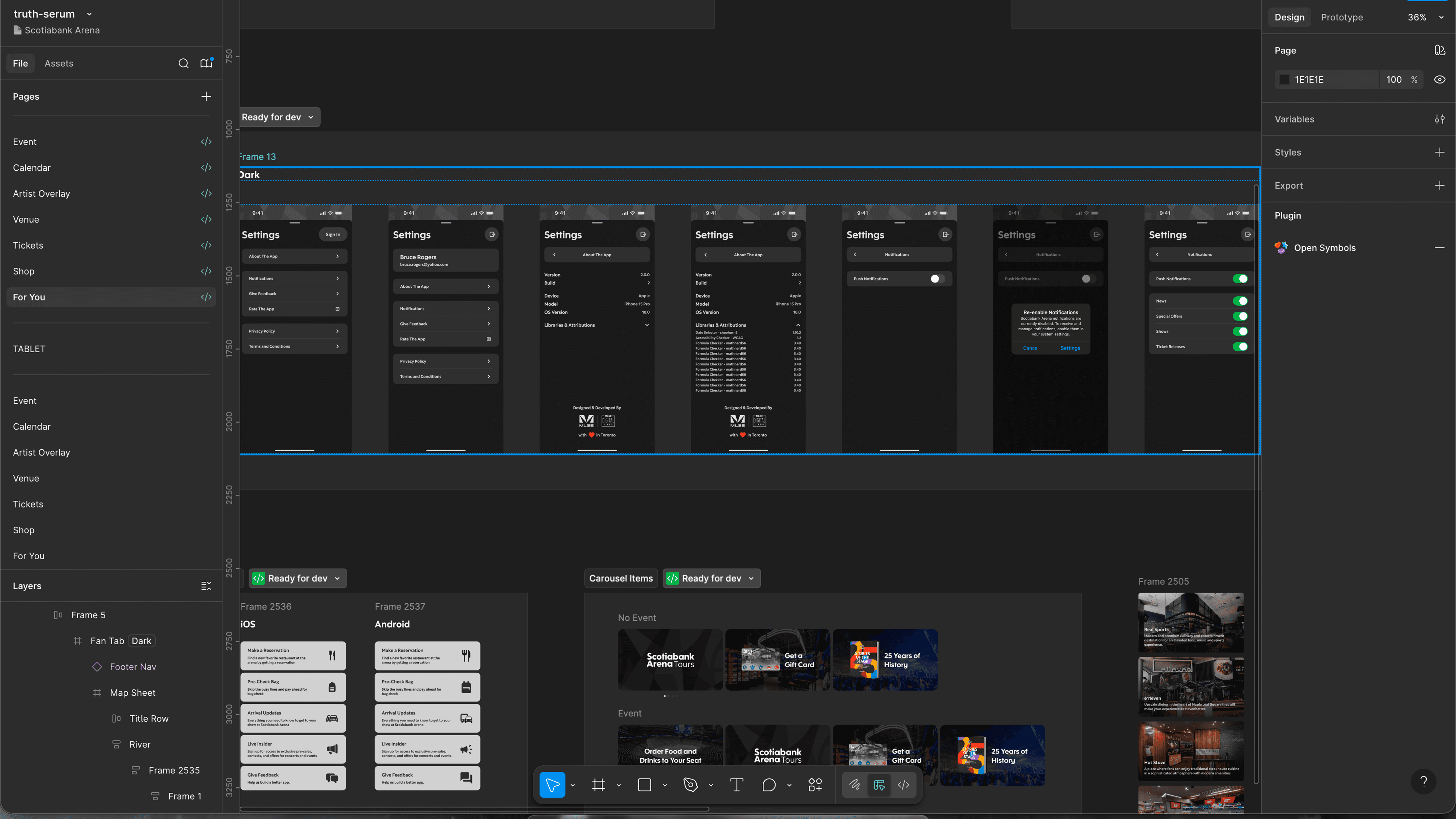
With the project moving quickly, our team was prototyping and iterating in real time. This created hand-off challenges for engineering, so I took the lead on building a comprehensive source-of-truth document, something we referred to internally as “truth-serum.” It centralized decisions, states, and flows to keep everyone aligned.
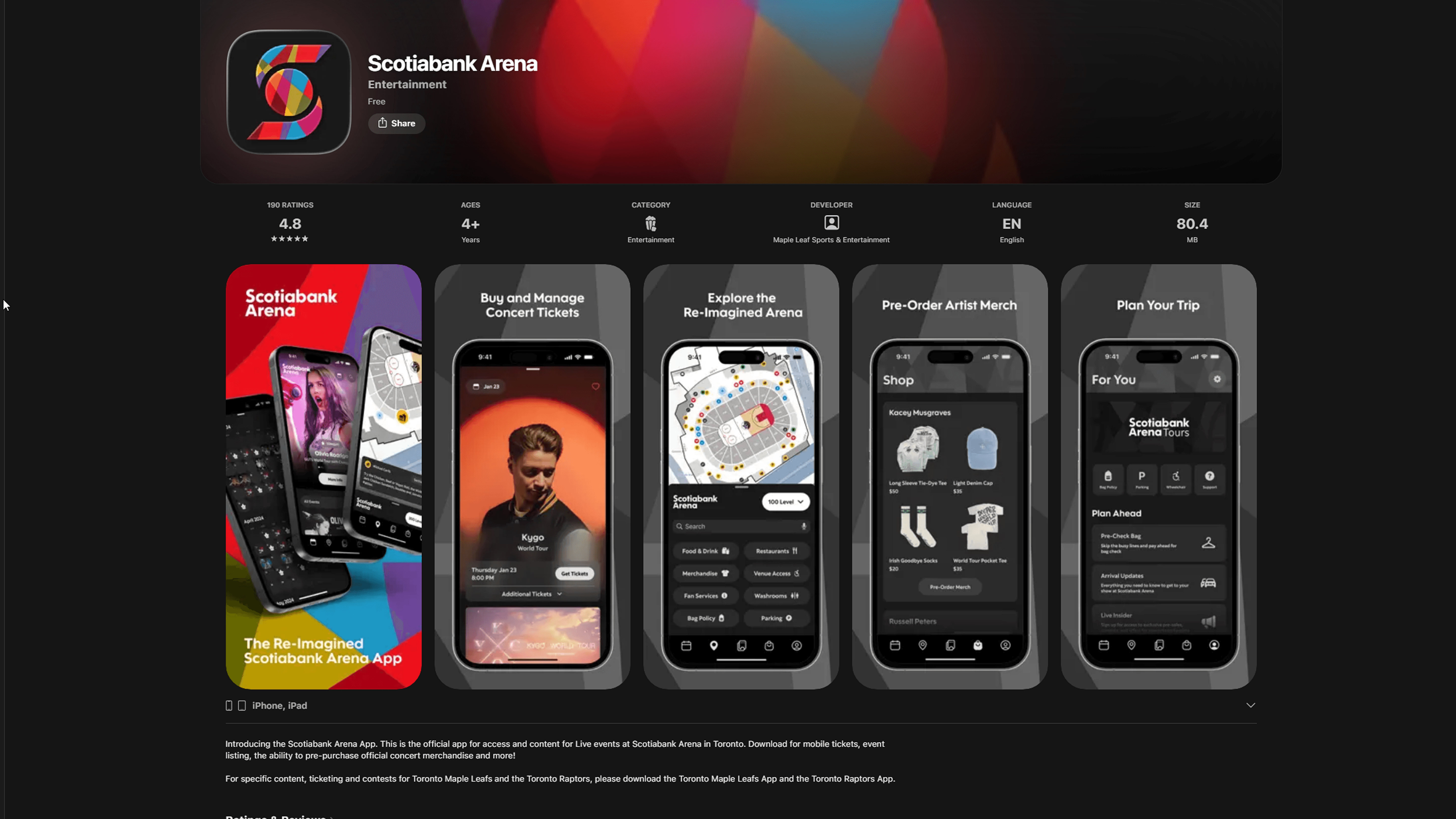
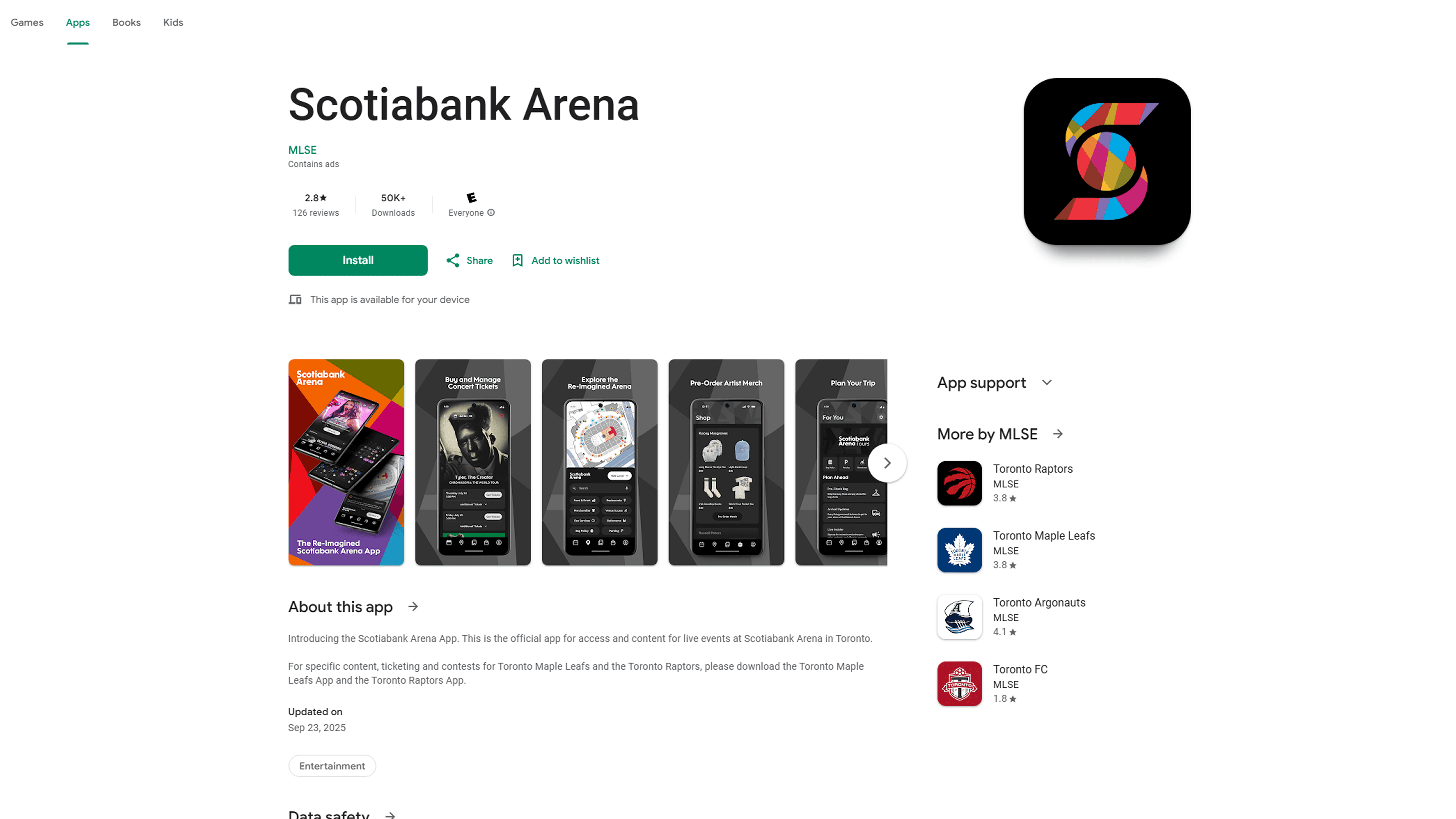
App/Play Store Previews
Product Snapshots
I designed the App + Play Store previews to spotlight a focused set of features, using clean layouts that put the UI at the center. Each frame emphasizes the moments that best represent the feature’s value while staying aligned with the arena's core brand assets.
Impact
With strong momentum behind the release, fans quickly updated and explored the new features. The performance metrics below all exceed the year-over-year averages of the previous build.
Reflection
This project was a rare and meaningful milestone, designing an app for the venue I grew up visiting as a fan. It went beyond creating a smooth experience for today’s visitors; it was also a chance to address pain points I had personally felt over the years while learning the ins and outs of native app design, systems thinking, and how those layers come together in practice.
I’m grateful for the team that made this project possible. Huge thanks to our design lead and co-designer, Joel Schellenberger, and to Andy Shen, our product owner and engineering director, whose mentorship shaped both the direction of the work and my growth as a designer. I also want to acknowledge our incredibly adaptable developers; Ambrose Lau, Liwen (Lianna) Qiao, and Heitor Oliveira, for navigating handoff and platform constraints with patience and clarity. And finally, appreciation to Azadeh Hosseini and Jaismeen Kaur for keeping us aligned and ensuring the product was sharp and launch ready.
Re-do's
Given the usual constraints around time and resourcing, there are a few things I would approach differently if I had the chance to revisit the project.